

What a 24 × 36″ drawing taught me about patience, persistence, and the art of staying the course.
Every artist eventually reaches a point where they must decide whether they’re ready to commit, not just to making a drawing, but to living with it for months, or sometimes, even years. For me, that moment came when I began Mourning Swan, a 24″ × 36″ drawing executed in charcoal and white pastel. It ultimately took nearly a year and a half to complete.
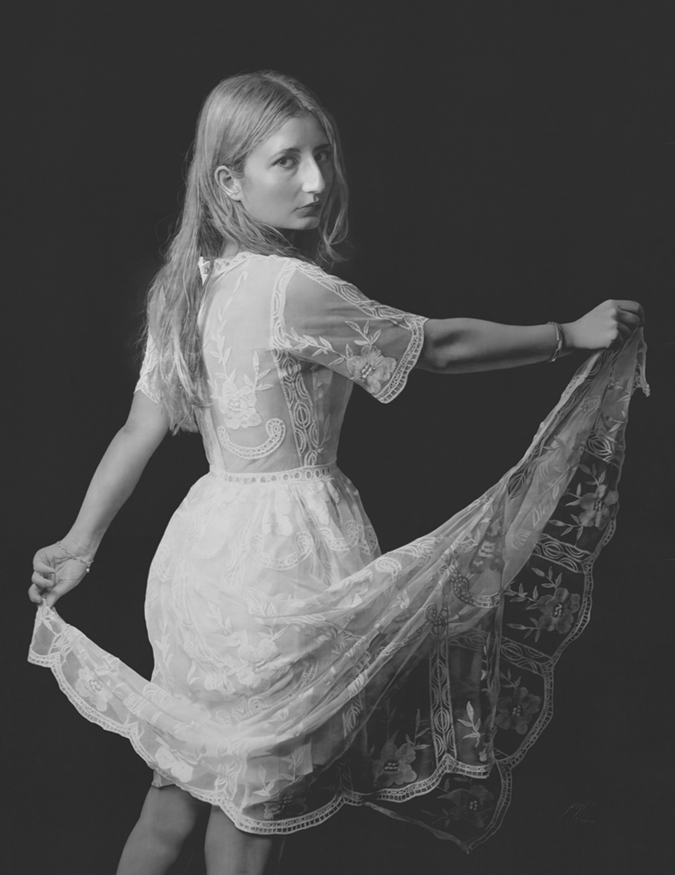
Within the Waichulis drawing program, this was no small undertaking. It was by far the largest and most demanding drawing I had attempted. Looking back, I often compare the experience to running a marathon. I began with enthusiasm: the reference inspired me, my goals were ambitious, and the excitement of starting carried me through the early stages. Before long, however, reality set in. The finish line was much farther away than I had imagined.
Large drawings test an artist in ways that extend beyond technical ability. They require consistency, discipline, and, perhaps most importantly, patience. There were countless days when it seemed as though I was making no progress at all. The subject itself offered little relief. Mourning Swan depicts a woman wearing an elegant white dress adorned with intricate lace, and every section demanded careful observation and deliberate mark-making. The lace at times seemed endless. Each fold, subtle value transition, and delicate highlight had to be developed slowly—one measured decision at a time.
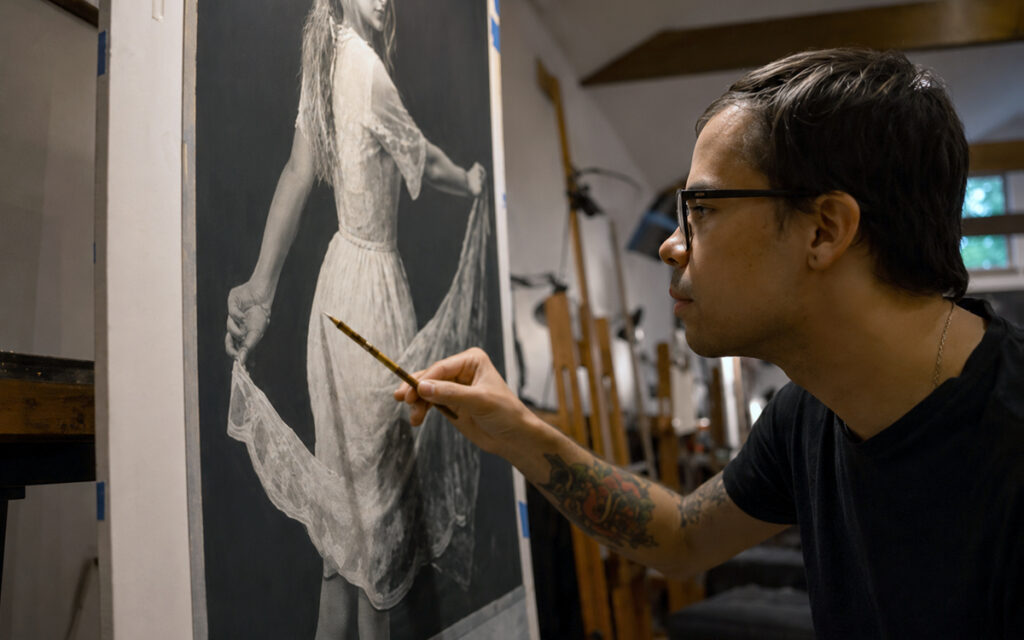
There were moments when I questioned whether I had taken on more than I could handle. When a piece occupies weeks, then months, and eventually more than a year, motivation inevitably fluctuates. The excitement of beginning fades long before the work is finished, and the end can seem perpetually out of reach.
Yet those were the moments that mattered most. I learned that long-term projects are not carried to completion by bursts of inspiration, but through persistence: returning to the work day after day, trusting the process, and believing that thousands and thousands of seemingly insignificant marks will gradually cohere into something greater.
In many ways, Mourning Swan became less a study in charcoal and white pastel than a lesson in endurance.
The experience fundamentally changed my understanding of artistic growth. Before this drawing, I believed exceptional work was primarily the result of technical skill. After completing it, I realized that technical skill is only part of the equation. Patience, resilience, discipline, and the willingness to remain committed long after the initial excitement has faded are equally essential.
Good art takes time.
That simple statement is easy to forget in an age of instant gratification. We scroll through finished images online in seconds but rarely see the hundreds of hours hidden behind them. Viewers experience the final drawing, not the countless days and evenings spent refining transitions, adjusting edges, or carefully constructing another section of lace. When Mourning Swan was finally completed, the rewards extended well beyond the satisfaction of crossing the finish line.
The drawing received First Place in Strokes of Genius 17, earned an Honorable Mention in the 17th Art Renewal Center (ARC) Salon Competition, and was selected for inclusion in the Lunar Codex Project, an extraordinary international archive preserving contemporary art, literature, music, and cultural works for future generations through time capsules placed on the Moon. Knowing that this drawing will become part of humanity’s cultural record beyond Earth is something I could never have imagined when I first decided to create this piece.
The drawing also found a permanent home in a private collection, giving it a robust life beyond my studio walls. Those recognitions were deeply gratifying, but they were never the true reward. The greatest reward was becoming the kind of artist capable of finishing such an endeavor in the first place. Mourning Swan expanded my technical capabilities, but more importantly, it strengthened qualities that cannot be rushed: patience, perseverance, discipline, and confidence in a process whose results may not be visible for months.
Today, it remains one of the most significant works in my portfolio, not simply because of the awards it received or the recognition it earned, but because of what it represents. It reminds me that meaningful work often requires sustained effort over long periods and that artistic growth is measured not only by what we create but also by whom we become in the act of creating.
For artists contemplating a large project, my advice is simple: don’t measure your progress by how much remains. Measure it by your commitment to showing up. Every great drawing is completed one mark at a time. Every marathon is finished one step at a time.

1 Comment
So glad I got to see your beautiful work in person, AND meet the lovely model too! Spectacular achievement!