
Simplicity and Bold Impact – The Legacy of Robert Indiana
There are certain ideas and emotions that are so intrinsic to human nature that they permeate our history and the divide of culture. Hunger, longing, love, death, etc. Because of this ubiquitousness, we often view the creation of art around such ideas as simplistic. But American artist Robert Indiana leaned into the power of these “simplistic” ideas and made them the center of his artistic creation.
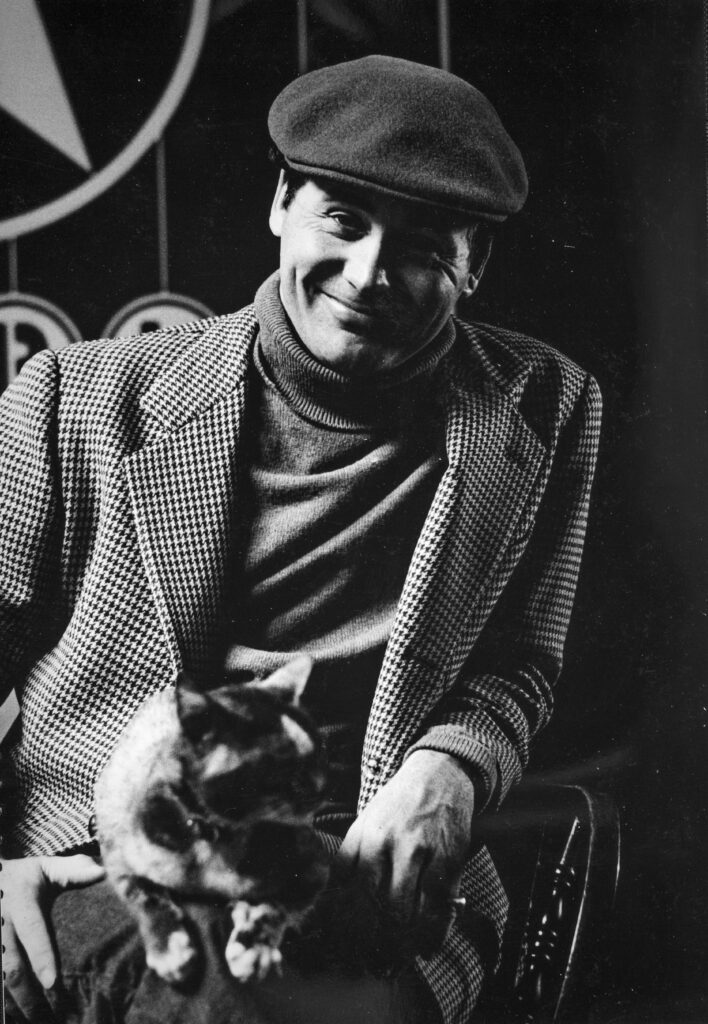
Robert Indiana, whose real name was Robert Clark, was a multidisciplinary artist who’s work may have looked simple at first glance but is anything but. He was known as one of the most creative artists of his time, exploring themes of language, identity, and personal history through hard edged paintings, assemblage sculpture, and pop art. But one of his most central themes was his expression of love. And it would be this that would make his artwork internationally known.
Before Indiana started his art career, he spent three years in the United States air force. Upon leaving, he began his art education that would last for six years and took place in both the US and England. Upon graduating, he would settle in New York City in the 1950’s. Here, he would become part of an art community that involved other artists like Andy Warhol, Agnes Martin, Jack Youngerman, and Ellsworth Kelly who would be his biggest inspiration and romantic partner from about 1956 to 1964.
The period of time that their relationship lasted was the most crucial part of his career. Kelly and the other artists influence along with where his studio was would define who he would become. With Kelly’s suggestion, Indiana began experimenting with hard edged paintings, abstract paintings that used abrupt transitions between colors, geometric shapes, flat color applications, and impersonal execution. At the same time, he moved his studio to The Slip, three blocks on the tip of Manhattan, which was just as influential in his work as Kelly.
Coenties Slip changed these artists, and their art changed history. Through its contradictory offering of community and obscurity, Coenties Slip provided the setting for the development of what I call “collective solitude”—a model of creativity born in the singular geographic and social conditions of place. Collective solitude is not about a movement and its manifestos, a set of ideals to work toward, or even a shared sense of what art needs to be. It is about being together in a specific place and time, without denaturing each individual story. It’s about knowing that there are others around you—above and below, just down the block—who are also trying to work out how to make something compelling, and how to survive while doing it. But also knowing that you are alone and free.
Prudence Peiffer, The Historical Present: Collective Solitude at Coenties Slip, https://brooklynrail.org
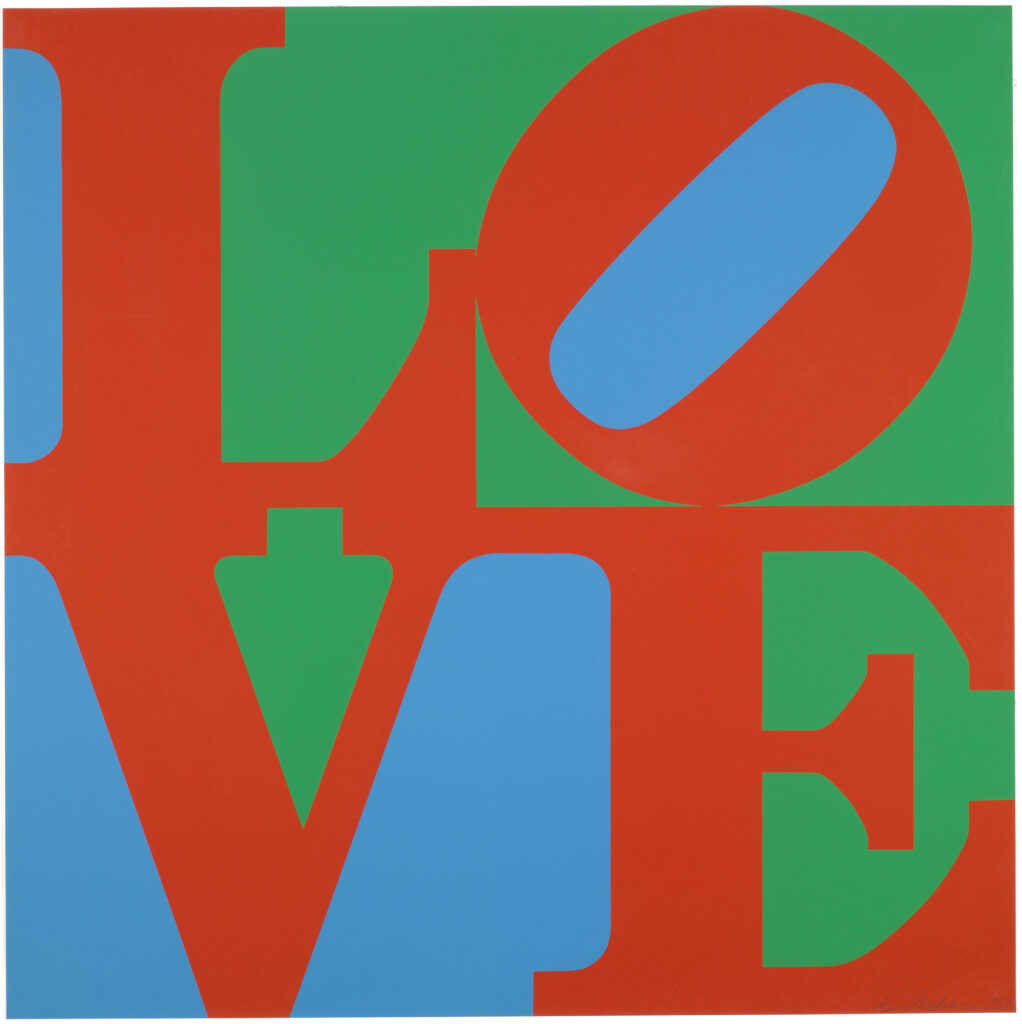
In 1964, Indiana and Kelly’s rocky relationship would come to an end, but this would be the catalyst that would lead Indiana to creating his most well known artwork titled Love (see above). The piece was selected by the Museum of Modern Art for their Christmas card in 1965 and would go on to be one of their most profitable cards. Now most people saw this piece as hopeful and optimistic but it is now understand that it was likely a said or angry piece for Indiana. Part of this speculation is that the colors he chose, blue, red, and green, were the most prominent colors in Kelly’s paintings.
Now while the origins of Love may be sad, it was the beginning of his Love series that would go on to make him an international name. It would be reprinted on silk screen for his exhibition that the Stable Gallery in 1966. Then in 1973, the United States post office would commission a version of it to become an 8 cent stamp in time for Valentines Day.

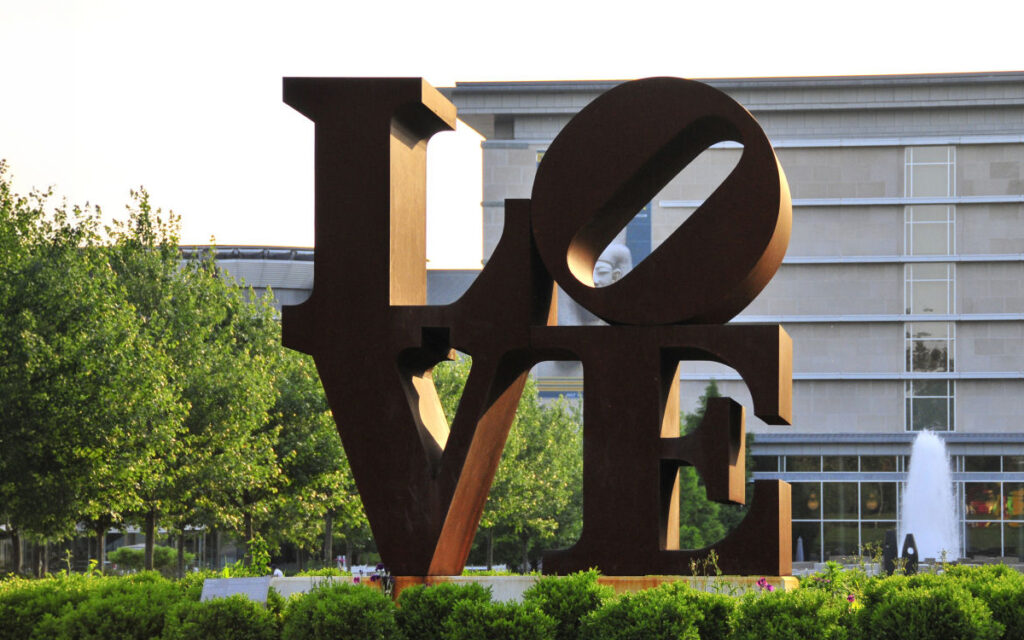
The stamp would go on to be so popular that in the next two years, it would be printed over 425 million times. In 1970, he would make his first monumental Love sculpture which is now part of the Indianapolis Museum of Art.
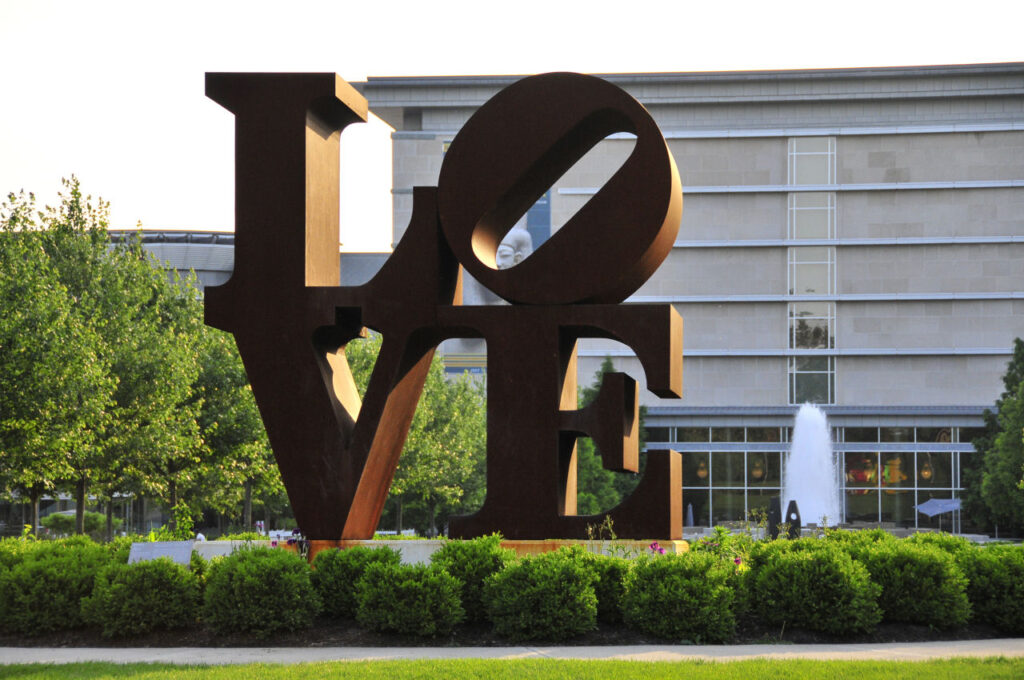
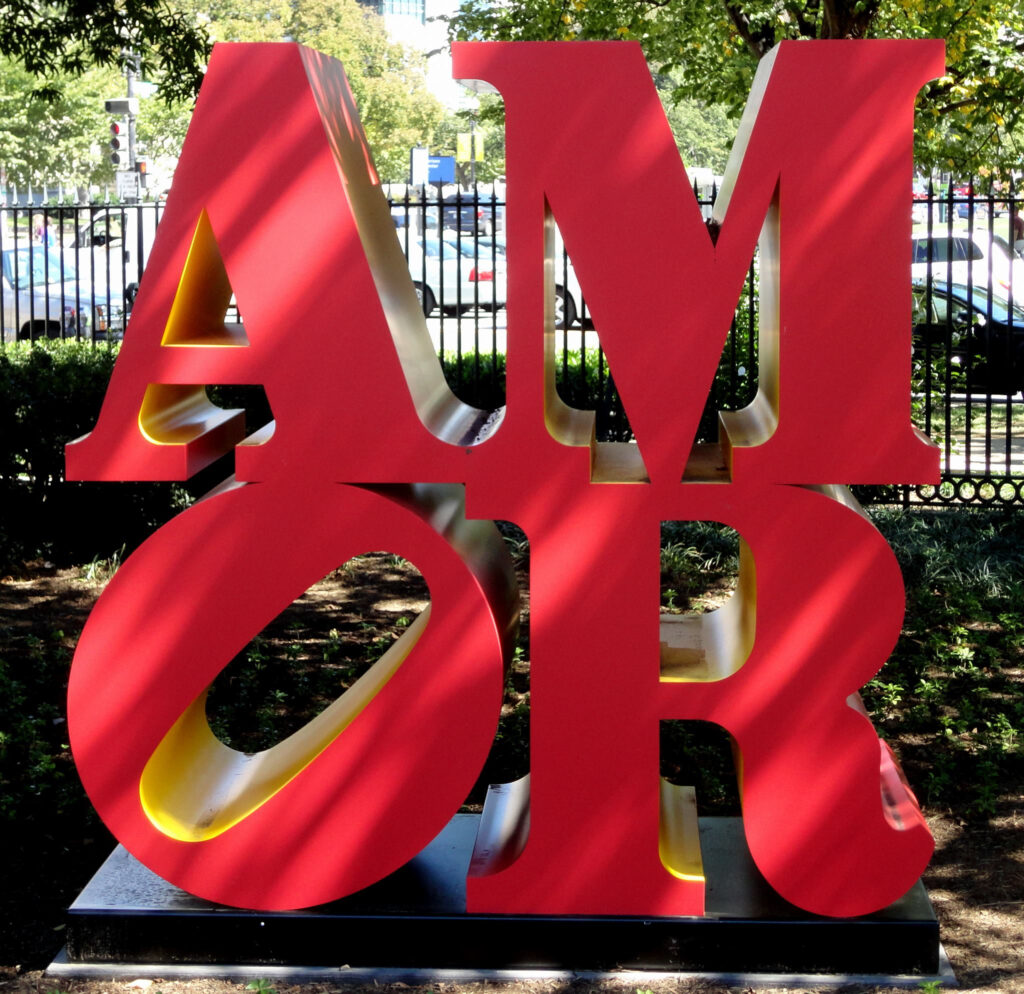
These sculptures would show the way a simple idea could communicate beyond culture and words. The original Love sculpture has been featured in thirty nine locations in the United States, four locations in Canada, eleven locations in Europe, twenty one locations in Asia, and three locations in Latin America. Beyond that, it has variants in Hebrew, Chinese, Italian, and Spanish that have been created globally. One gay man’s expression of love and loss has gone on to inspire millions.