

When I first transitioned from drawing to painting, I wasn’t expecting it to feel as difficult as it did.
I had spent years building confidence in drawing, working with charcoal, getting comfortable with value, control, and observation. There was a point where I felt like I understood what I was doing. My marks felt intentional. I could trust my process.
Then I started painting… and it felt like all of that disappeared.
Suddenly, things that once felt simple became frustrating. My marks felt clumsy. My control wasn’t there. Even when I knew what I was supposed to do, I couldn’t get my hand to cooperate in the same way. It honestly made me question my progress for a bit. How am I struggling this much when I’ve already come so far?
But over time, I started to understand that this wasn’t a setback; it was part of the process.
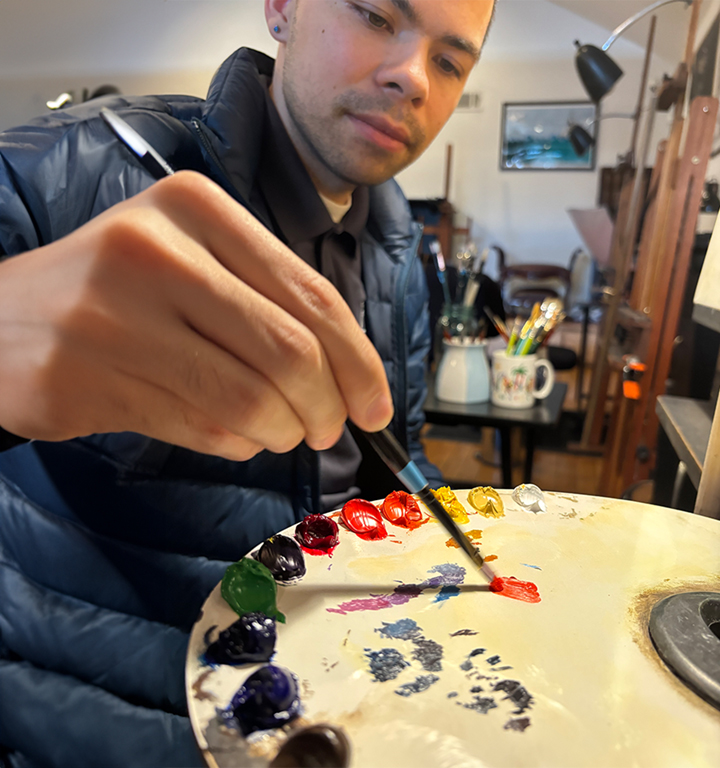
In the Waichulis program, the transition from drawing to painting is intentional. Drawing builds the foundation: how to see, how to judge relationships, how to control your marks. But painting introduces a completely different level of complexity. Now you’re dealing with color, paint thickness, brush handling, and edge control; there are just more variables at play.
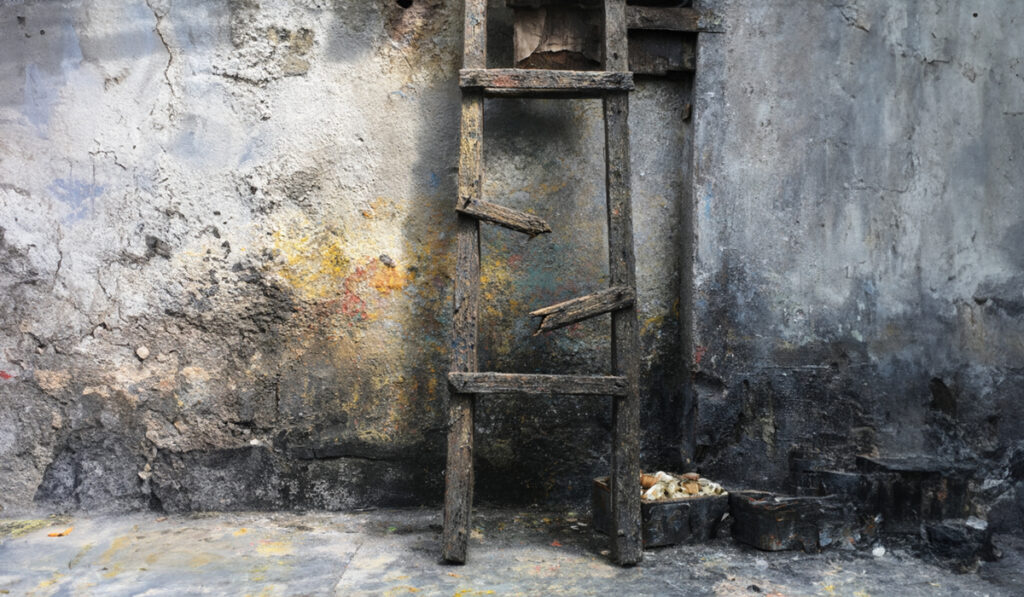
And for me, the experience felt like climbing a broken ladder.
I would have moments where something clicked, where a passage came together, and I felt like I was finally getting it. But then the next day, I’d feel like I slid all the way back down. The inconsistency was frustrating. It didn’t feel like steady progress; it felt like starting over again and again.
But what I began to notice was this: every time I climbed back up, I was getting just a little bit higher.
Even though it didn’t feel like it in the moment, I was improving.
Looking back, I can see that this is just how learning works at this level. When you move into something more complex, your old habits aren’t enough anymore. You’re forced to rebuild your understanding under new conditions. And during that process, confidence takes a hit.
Painting made that especially obvious for me because it demands so much at once. In drawing, I mostly focused on value and pressure. In painting, I had to think about value, color, edges, and how the paint physically behaved. It slowed me down and made everything feel harder.
There were definitely moments where I questioned myself.
But now I see that those moments weren’t signs that I was failing; they were signs that I was growing.
Over time, things started to stabilize. The “falls” didn’t feel as dramatic. The climbs became more consistent. What once felt chaotic began to make more sense as I gained more experience with the material.
That broken ladder never fully goes away, but it stops feeling so unpredictable.
If anything, I’ve learned to trust it.
Because even when it feels like you’re slipping, you’re still moving upward. And those small, frustrating climbs are exactly what build the skill you’re trying to develop.
