


In observational drawing and painting, “respect” is often associated with subject matter, tradition, or sincerity of intent. Within the Waichulis framework, however, the more useful starting point is perceptual awareness. The central issue is not reverence for the object, but an accurate understanding of the limitations and tendencies of the visual system that mediates our experience of that object. The Waichulis Curriculum is built around the development of perceptual calibration and controlled mark-making through structured, sequenced exercises informed by vision science and skill-acquisition research.
To work perceptually is to recognize that what we experience is not objective reality delivered intact to consciousness. It is a perceptual event shaped by biology, prior experience, contextual conditions, and adaptive bias. This is not a minor philosophical note. It is foundational to observational representational practice. In Waichulis’ terms, the artist does not engage objective reality directly but rather responds perceptually to a stimulus.
Perception Is Not a Direct Record
Modern vision science does not treat perception as a passive recording of the world. Rather, perception is understood as an active, constructive process in which ambiguous retinal input is organized into a usable percept. Psychology professor and researcher Stephen E. Palmer describes perception as the building of workable representations from incomplete sensory information. Neuroscientist Dale Purves argues that percepts are shaped by the empirical significance of stimuli derived from past experience rather than by direct access to measured physical properties. Waichulis draws directly on this anti-veridical view when discussing realism, perception, and representation.
This position is formalized in the Waichulis lexicon through the A1 Problem. The artist does not access the stimulus itself in any objective sense, but rather their perceptual experience of it. What guides the representation is not “A,” but “A1.” Likewise, the viewer does not directly recover the artist’s experience, but generates another perceptual response of their own. This means that representational image-making is not a matter of copying reality as such, but of constructing a surrogate that elicits a targeted perceptual response with greater consistency and reliability.
For that reason, observational work begins with a critical concession: what feels obvious is not necessarily what is visually useful. Initial impressions are often rapid interpretations informed by habit, category, and prior exposure. In representational training, these reflexive interpretations must be monitored carefully, because they can substitute learned conventions for observed relationships.
Perceptual Bias and the Cost of Assumption
Perceptual bias is not an occasional defect in an otherwise neutral system. It is a normal feature of an adaptive visual apparatus. The visual system resolves ambiguity efficiently by drawing on past associations. That strategy is useful for behavior, but it can undermine any colloquial notion of observational accuracy. Familiar objects are especially vulnerable to this interference: we tend to respond to what we know them to be, rather than to the specific visual relationships present in a particular moment. In drawing, this often leads to symbolic substitutions, proportion drift, and contour assumptions that are conceptually convenient but perceptually unreliable.
Within the Waichulis model, the problem is not interpretation itself, but premature, naive, or unregulated interpretation. When an artist assumes that a value change must indicate a form turn, or that a contour must correspond to a known object boundary, inference can override observation. The result is not simply a technical error, but a perceptual one. The artist begins to respond to expectations rather than measured relationships.
Observation and Interpretation
A key training dynamic in the Waichulis curriculum is the deployment of useful heuristics that promote the conceptual separation of observation from interpretation. Observation concerns relationships: value intervals, edge behavior, spatial intervals, pressure control, shape proportion, and directional change. Interpretation assigns identity, function, and meaning. Because interpretation tends to be fast, automatic, and deeply habitual, it can dominate too early unless the training structure actively constrains it. This is one reason the curriculum begins with highly controlled exercises that isolate specific perceptual and motor problems before increasing complexity.
Exercises such as pressure scales, gradations, and shape replication do not merely build hand skills. They help stabilize perceptual judgments by reducing conceptual interference and by requiring the learner to attend to measurable relationships rather than to object labels. In this way, the learner builds a more reliable bridge between what is perceived and what is produced.
Historical Examples and Perceptual Utility
A good number of historical examples can support this discussion, but, as with all such cases, they should be handled with restraint. They do not “prove” the effectiveness of any contemporary curriculum model through their potential alignments, nor should they be used to romanticize “pure observation” as though artists simply transcribe reality without mediation. What they can do is illustrate recurring strategies and operational patterns by which artists and teachers reduced conceptual interference, stabilized judgment, and organized images around perceptual utility rather than object-knowledge alone.
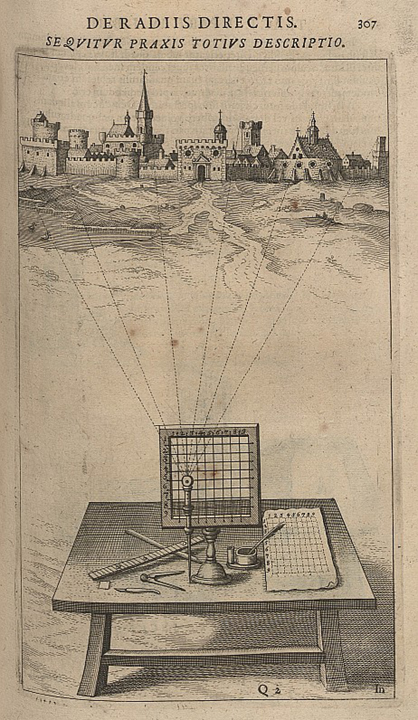
A good, pragmatic example to start with here is Leon Battista Alberti’s description of the velo or “veil,” a gridded device placed between observer and subject. Its importance lies not in its somehow guaranteeing truth, but in externalizing comparison. It encouraged the artist to treat vision as a field of measurable intervals rather than as a stream of symbolic assumptions. In that sense, the veil functions as a historical acknowledgment that unaided judgment is vulnerable to bias, and that observational practice benefits from structures that slow interpretation and support relational seeing.
Leonardo da Vinci offers another important contribution to this topic. His discussions of atmospheric effects, soft transitions, and the instability of clear contour in nature are often condensed into the term sfumato, but the deeper relevance here is perceptual. Leonardo repeatedly warns against relying on schematic outlines and instead attends to how form is revealed through gradual transitions, optical uncertainty, and contextual contrast. This is both relevant and insightful as it shows an artist deliberately organizing pictorial information around how form is visually encountered rather than how objects are conceptually named.
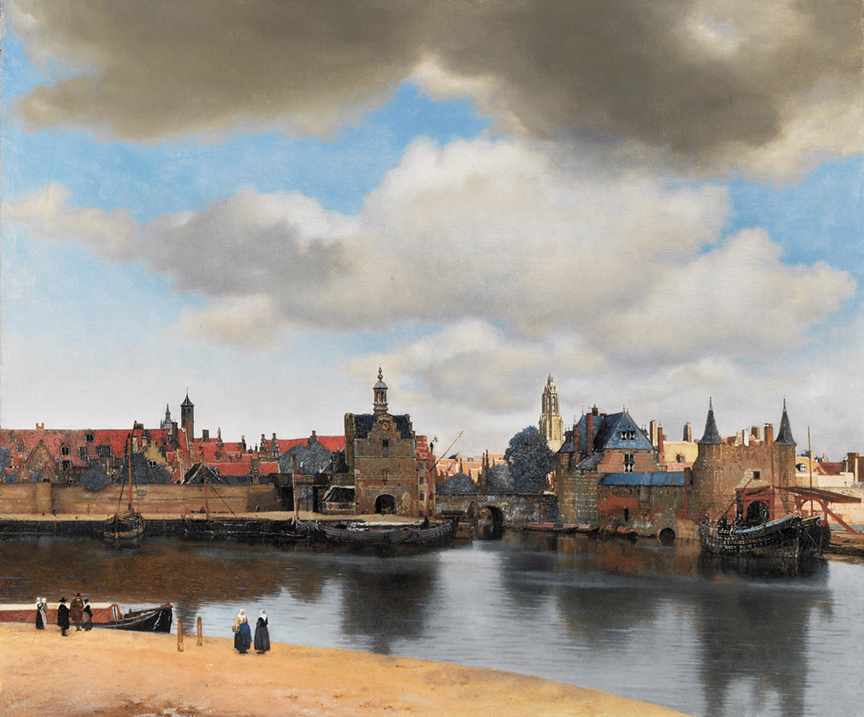
The paintings of Johannes Vermeer are often invoked in discussions of observational realism, and they can be helpful here if handled carefully. The strongest reason to bring up Vermeer lies in the visible structure of the images themselves: compressed value ranges, restrained edges, selective focus, and quiet control of interval relationships. Together, these characteristics produce a stable and convincing percept of light-filled space without requiring exhaustive descriptive detail everywhere. Vermeer is therefore useful as an example of a picture designed to elicit a coherent perceptual response through calibrated organization rather than the maximal articulation of every local fact.
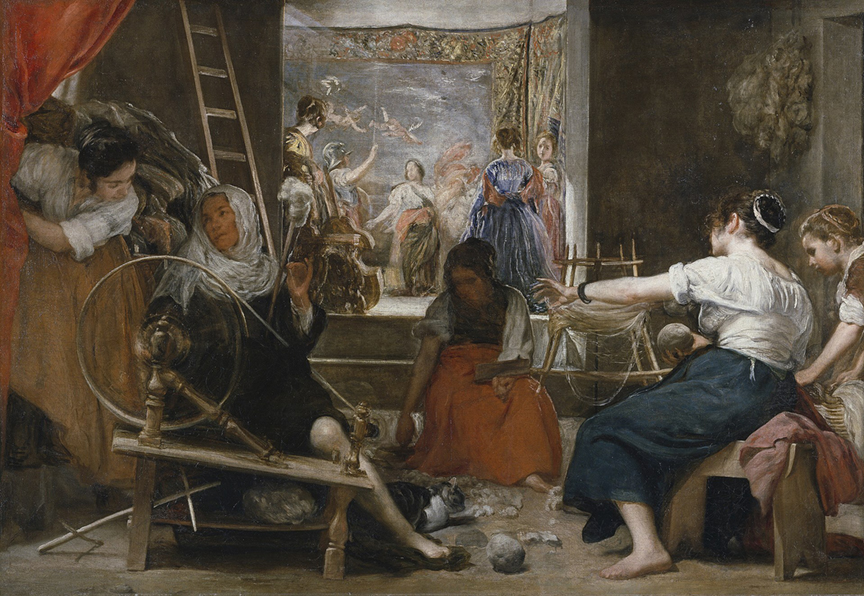
A related example appears in Diego Velázquez, especially in passages where forms resolve at a distance more effectively than they do under close inspection. Velázquez shows that representational clarity can emerge through lost-and-found edges, value grouping, and selective sharpness. These devices make the image highly dependent on viewing conditions and perceptual completion. This is particularly relevant to any discussion of “observational accuracy” because it reminds us that convincing representation often arises from the strategic orchestration of cues that the visual system can efficiently organize.

In the eighteenth century, Jean-Baptiste-Siméon Chardin offers a strong example of perceptual economy in still life and figure painting. His forms often emerge through subtle value masses and carefully moderated transitions, with contour kept understated rather than emphatic. The resulting sense of solidity and presence is built through tonal relations more than linear insistence. For a contemporary discussion of perceptual training, Chardin is useful because his pictures show how form can be made persuasive by calibrating relational structures that remain visually coherent under ordinary viewing, even when individual marks are understated or ambiguous in isolation.
The nineteenth-century Bargue-Gérôme Drawing Course is especially relevant because it reflects a pedagogical effort to discipline observational judgment through a staged progression of difficulty. The plates can be used to isolate problems of proportion, shape, angle, envelope, and value grouping before asking the learner to manage greater complexity. Whatever one thinks of its broader academic context, the sequence embodies a key principle: representational performance in a developmental context becomes more reliable when perceptual and motor demands are broken into manageable, repeatable components. In that respect, it stands as a historical analog for any curriculum that seeks to separate observation from premature interpretation and to build performance through structured calibration rather than expressive improvisation alone.
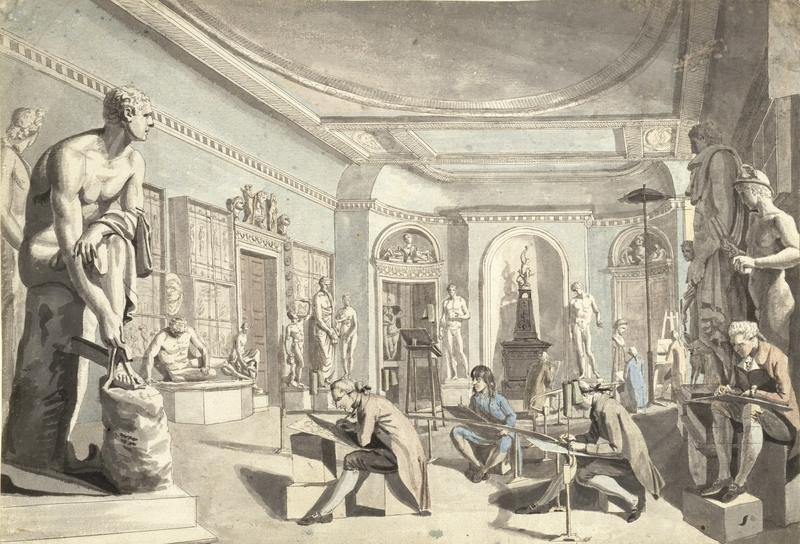
Academic cast drawing traditions, more generally, also deserve mention. Historically, they helped reduce variables such as color complexity, motion, and unstable lighting so that the student could attend more directly to proportion, value design, edge behavior, and the relation between light logic and form. The cast room often functioned, in effect, as a controlled perceptual laboratory. That does not make it universally superior as a method, though it does show that many historical training systems recognized the value of constraining variables in order to stabilize perceptual judgment.
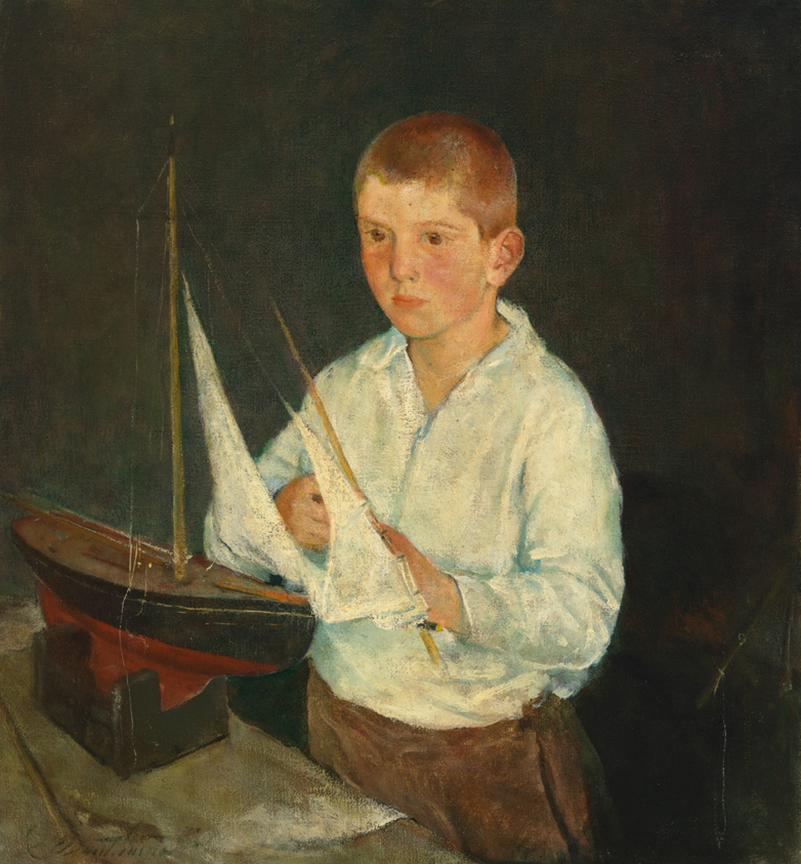
A further example can be found in Charles Hawthorne’s emphasis on seeing “spots of color” instead of named objects. Even when his broader aims differ from those of more tightly controlled atelier traditions, the underlying warning remains familiar: object recognition can override observation. Hawthorne’s instruction pushed students away from symbolic shorthand and toward direct comparison of visual relationships. That move is historically significant because it reflects the same practical concern found in many otherwise different pedagogies. The artist has to resist the pressure to draw what is known instead of what is seen.
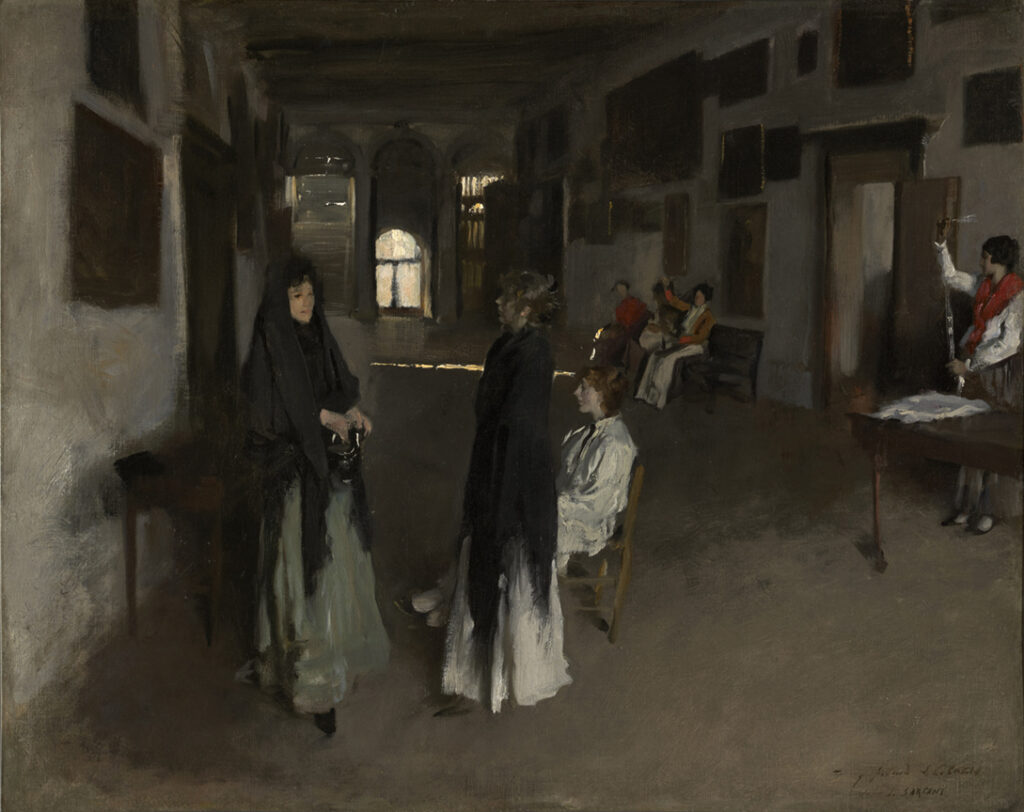
Even John Singer Sargent, often praised for apparent fluency and bravura, can be understood productively in this light. His strongest work depends on highly selective organization. Edges are not equally asserted, value masses are grouped for legibility, and detail is distributed according to perceptual priority. What looks spontaneous is often the result of extraordinary discrimination about which cues are necessary for the viewer to assemble a convincing percept. Sargent, therefore, helps illustrate an important point: perceptual discipline and apparent ease are fully compatible. In mature practice, the latter often rests on the former.
Taken together, these examples suggest that across very different periods and aims, successful representational practice has often depended on an implicit respect for perceptual mediation. Artists repeatedly developed procedures, image structures, and training conventions that reduced the interference of habit and concept, privileged relational judgment, and organized marks according to what the visual system could use. The historical record does not present a single doctrine of observation. It does, however, show recurring attempts to work with the conditions of perception rather than against them.
To appreciate the advantage of understanding and respecting the dynamics of perception in observational practice is to recognize the actual conditions under which representational drawing and painting occur. The practitioner works from a world encountered through a biologically constrained, interpretive system rather than some passive access to reality. Once that is acknowledged, the task changes accordingly. Greater importance falls on calibration, comparison, and controlled response, while confidence, habit, and symbolic shorthand become less trustworthy guides. Within that framework, observational skill involves managing perceptual mediation with enough precision to construct reliable visual surrogates. The value of such training lies in helping the artist work more deliberately with the conditions that shape seeing, and therefore more responsibly with the images those conditions make possible.
