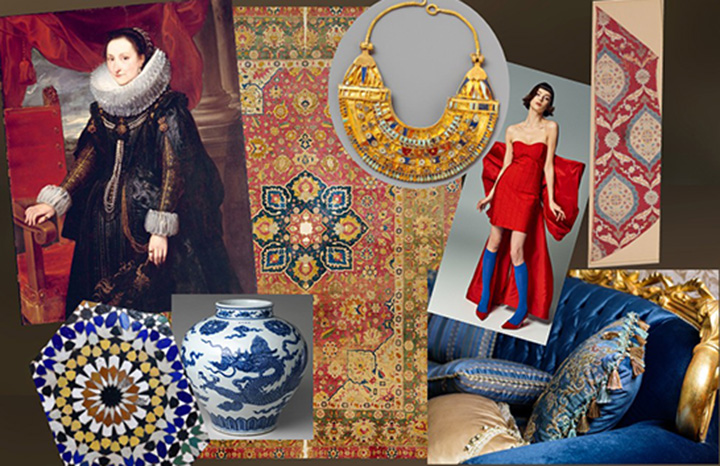

The Adorned World is a column about the lives of objects and the choices that shape them.
My vision for this new column is to look beyond how things are made to consider how they are adorned. “Ornamentation” often conjures up superfluous decoration, enhancements, unnecessary garnish, or outright gaudy details.
Ornamentation is crime
Adolf Loos, Ornament and Crime, 1908
True, ornamentation is what goes beyond structure to surface embellishment. Throughout human history, in all parts of the globe, people have taken what is necessary and carried it further. They used carving, painting, patterning, and refining the objects they live with. This impulse to decorate the objects they lived with is not incidental. It is one of the most enduring ways we leave meaning behind. Therefore, I am approaching these articles as a celebration of human ingenuity and excellence.
There will be a lot of asking, “Why do objects look the way they do? Why are some reduced to their bare essentials, while others are layered with detail? What do these choices reveal about the cultures that produced them and the values they made visible?”
Whether works of art, decorative forms, architecture, or fashion, these objects begin with purpose. Their forms emerge from function but are continually shaped by culture through processes of refinement and display, often reflecting systems of value and status. Over time, these forms are reinterpreted for new contexts, resulting in cycles of reduction, revival, or hybridization.
From the disciplined clarity of Bauhaus design to the exuberant ornament of Rococo interiors, history offers no single answer but rather a shifting balance between utility and expression. The same tension appears in the restrained geometry of Japanese wabi-sabi, where imperfection and simplicity are elevated into a philosophy, and in the dense symbolic ornament of Islamic art, where pattern becomes a vehicle for the infinite. It can be found in the intricate beadwork of Maasai adornment, where decoration carries social meaning, and in the polished minimalism of contemporary technology, where seamless surfaces project control, precision, and inevitability.
The study of the ornamentation of objects allows us to understand the imprint of a culture’s taste and values, while echoing the scientific discoveries, expanding networks of exchange, and broader human advancements of its time. I am excited to travel through time and hope you come along for the journey!
Have nothing in your houses that you do not know to be useful, or believe to be beautiful.
William Morris, The Beauty of Life, 1880