

The Adorned World examines how objects are made and the choices that shape them. It explores design, fashion, craft, and material culture across architecture, interiors, decorative arts, dress, and ritual, with close attention to the details that give them meaning. Objects do more than serve a function. They reflect cultural values, express identity, and carry visual languages that can be understood across time.
The chair is where we begin our journey. Beyond offering a place to sit, its proportions, materials, surfaces, and details reveal how a culture understands the body and its place in the world. A chair may suggest authority or comfort, ceremony or everyday use. While its design supports the act of sitting, its decoration situates that act within a broader cultural context. In this way, the chair becomes a record of how design and decoration work together, with each era shaping that relationship differently.
Origin: Authority Before Comfort
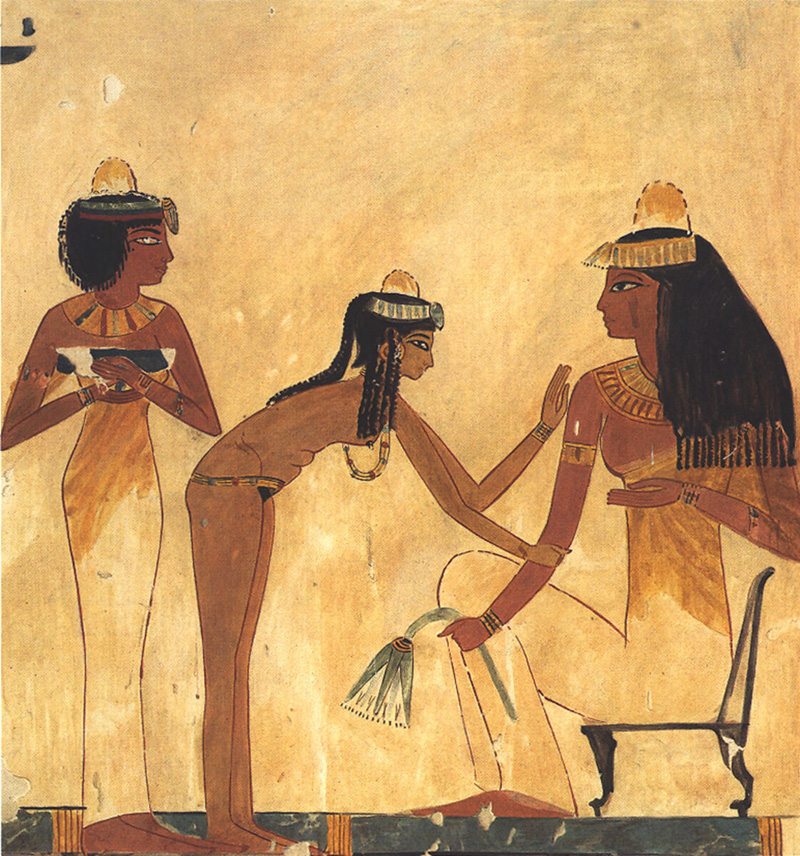
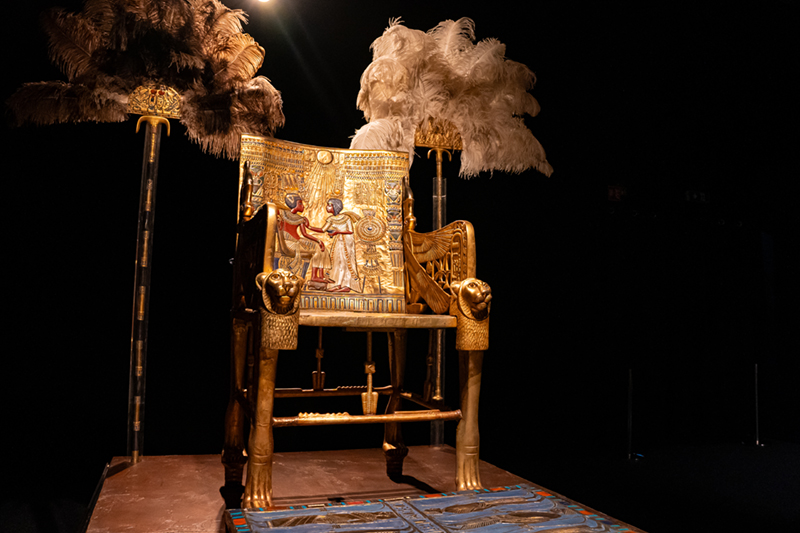
Early chairs, especially elevated or back-supported forms, were often less concerned with comfort than with rank, authority, and ceremonial presence. In ancient Egypt, seating was reserved for those of status, and its design carried a precise symbolic weight. The throne of Tutankhamun, dating to around 1325 BCE, makes this visible with remarkable clarity. Constructed of wood, overlaid with gold, and enriched with glass, faience, stone, and colored inlay, its surface affirms divine kingship through materials and iconography. The chair does not respond to the body so much as it elevates the figure who occupies it. Its proportions are formal, its structure firm, its decoration deliberate. Authority is not implied. It is constructed.
The circumstances of its modern rediscovery reinforce this impression. When Howard Carter first looked into King Tutankhamun’s tomb in 1922, the antechamber appeared densely arranged, its contents placed back into order after earlier disturbance. Among the densely arranged objects, the gilded throne immediately stood out, its reflective surface distinguishing it from the surrounding material. It remained in this space rather than the burial chamber itself, preserved largely intact. Carter and his team proceeded with the method, documenting and stabilizing the contents over several months before removal. The throne quickly drew scholarly attention, not only for its craftsmanship but for its imagery, which retains elements of the Amarna period in the intimate portrayal of the king and queen. Even in repose, the object continues to communicate a carefully constructed identity.
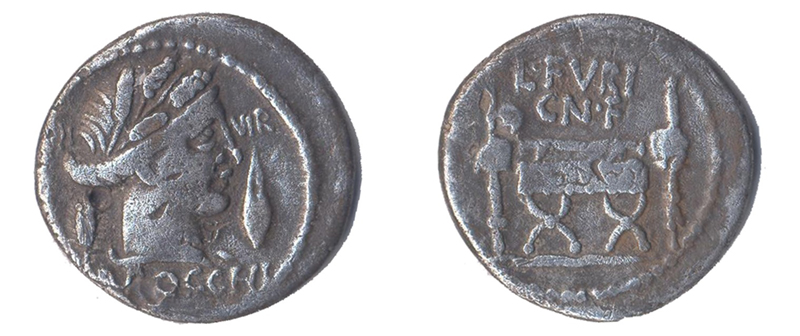
In the Roman world, the relationship between seating and authority became more formally structured, though no less deliberate. The curule chair, a folding seat defined by its crossed legs, was associated with high-ranking magistrates and public authority within the structured hierarchy of the Roman state.
Offices such as consul and praetor carried imperium, the legal authority to command, and the right to sit on this chair was bound to that power. Its form is notably restrained. There is little ornament, with little emphasis on comfort beyond the essentials of a portable seat. Yet its meaning is unmistakable. When placed in a public setting, the chair functioned alongside other markers of office, including the toga praetexta and the presence of lictors bearing fasces. In this context, design is reduced to structure, while symbolism is carried through restriction and use. The object does not describe authority. It enforces it.
This alignment between seating and institutional power continued into the medieval period. The bishop’s throne, known as the cathedra, often occupied a prominent, sometimes elevated position within the cathedral, frequently associated with the apse or choir and clearly visible to the congregation. The term “cathedral” itself derives from this seat, underscoring its central role. Within the ordered interior of the church, where architecture directed movement and defined hierarchy, the cathedra functioned as a point of convergence between space, ritual, and authority. Its construction was solid and upright, offering little accommodation beyond sitting. Ornament, when present, did not disrupt its restraint. The emphasis remained on permanence and clarity.
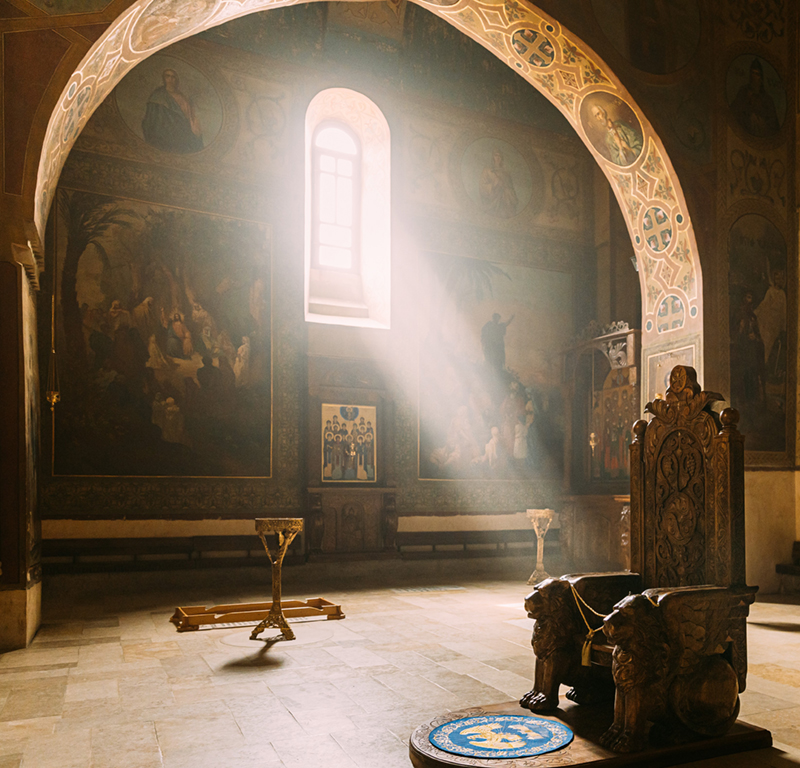
To occupy the cathedra was to assume the visible presence of ecclesiastical authority. The chair transformed the act of sitting into a public assertion of jurisdiction, aligning the individual with the institution’s structure. Across these early examples, a consistent pattern emerges. The chair is not yet a site of ease or adaptation. It is a fixed object that defines position within a larger system. Design establishes the role. Decoration, when it appears, clarifies the identity it accompanies.
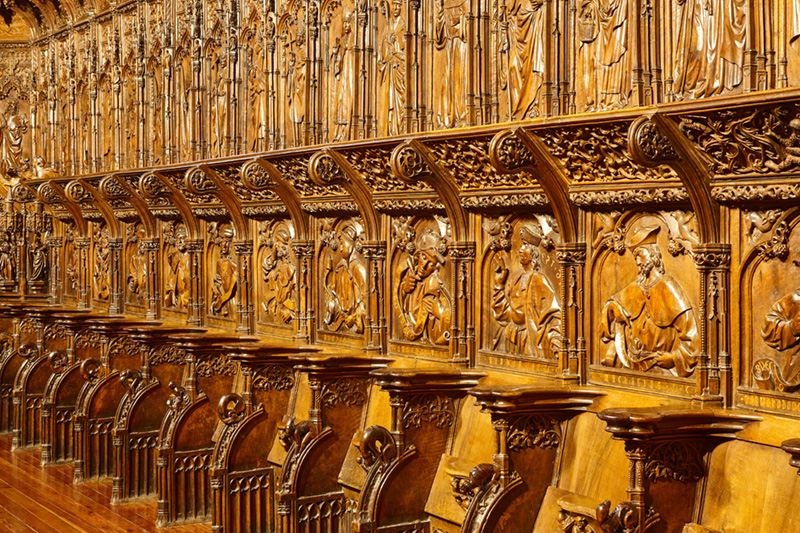
At this stage, design establishes position while decoration defines identity.
Transformation: Comfort Meets Display
Between the monumental austerity of the medieval world and the refined intimacy of the eighteenth-century salon lies the theatrical grandeur of the Baroque interior. Emerging in seventeenth-century Europe and closely associated with the reign of Louis XIV, the Baroque style transformed furniture into an instrument of spectacle and authority. Interiors were conceived as unified environments of movement, ornament, and visual drama, where architecture, decoration, and furnishings worked together to project power and magnificence. Gilded surfaces, heavy textiles, carved wood, mirrors, and richly patterned wall treatments created spaces intended to overwhelm the senses and affirm aristocratic prestige.
Chairs of the Baroque period reflected this emphasis on ceremony and display. Unlike the later fauteuil, which prioritized comfort and sociability, Baroque seating often retained a formal and upright character suited to court ritual. High backs, symmetrical forms, scrolling arms, and boldly carved details conveyed solidity and status. Walnut and gilded wood frames were frequently embellished with acanthus leaves, shells, masks, and other sculptural motifs derived from classical ornament. Upholstery in velvet, brocade, or tapestry further reinforced the richness of the interior. Yet despite their grandeur, Baroque chairs also mark an important transition in the history of seating, as increasing attention began to be paid to upholstery and bodily comfort, anticipating the more relaxed and intimate forms that would fully emerge in the Rococo and Louis XV periods.
The French fauteuil, an open-armed upholstered chair, emerges as a defining form of the Louis XV period and gives this shift a precise material expression. Developed within the broader transformation of aristocratic life during the reign of Louis XV, especially in the mid-eighteenth century, it reflects the movement away from the rigid grandeur associated with Louis XIV and the formal spaces of Versailles toward the more intimate hôtels particuliers of Paris. These smaller interiors, organized around salons, encouraged conversation, proximity, and ease. Furniture followed suit. The fauteuil’s cabriole legs, curved back, and padded arms respond directly to the body, supporting a relaxed posture aligned with a more informal mode of sociability.
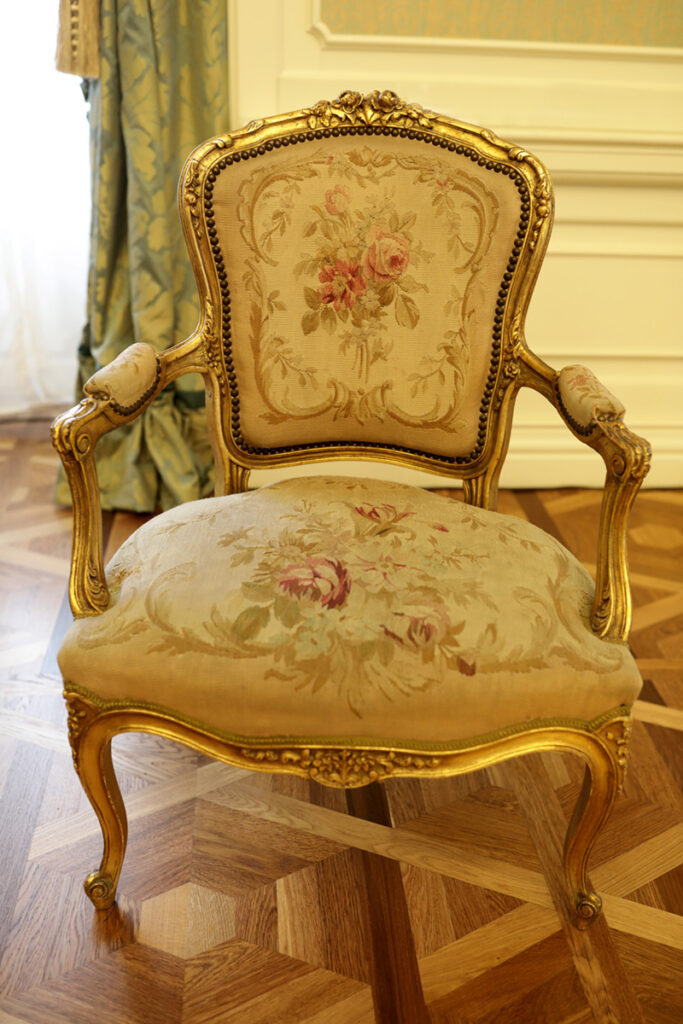
Within Rococo interiors, the chair operates as part of a larger decorative system rather than as an isolated object. Walls are articulated through carved boiserie, their surfaces animated with scrolling foliage, shells, and asymmetrical ornament, often finished in pale tones and gilding. Architecture, furniture, and decorative arts are conceived together, producing an environment defined by movement and visual continuity. The fauteuil echoes these conditions. Its serpentine lines and softened structure repeat the rhythms of the surrounding space, reinforcing a sensibility that privileges intimacy, variation, and sensory engagement over the fixed order of the preceding Baroque.
By contrast, the chair of the Louis XVI period reintroduces a disciplined sense of order. Its straight, fluted legs and rectilinear frame reflect the influence of classical antiquity, shaped in part by renewed European archaeological interest in ancient Greece and Rome, including discoveries at Herculaneum and Pompeii. Interiors shift accordingly. Rococo asymmetry gives way to geometric balance, controlled ornament, and a more measured use of decorative motifs such as laurel wreaths, medallions, and fluting. The chair aligns with this language, presenting a clearer structure and a more defined outline.
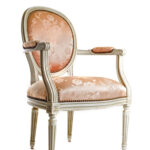
Yet this return to symmetry does not abandon the body. Upholstered seats and backs remain, and comfort continues to be considered, though recalibrated. The posture encouraged by the Louis XVI chair is more upright, suggesting a subtle adjustment in behavior rather than a rejection of ease. In this way, the object holds two positions at once. It draws on classical principles of proportion and restraint while maintaining the eighteenth century’s growing attention to lived experience.
Decoration no longer exists apart from the interior but participates fully within it. Chairs are integrated into a coordinated visual field where walls, textiles, and objects are designed in relation to one another. The result is a constructed environment rather than simply a furnished room. Design works with the body. Decoration shapes how that experience is perceived.
The decoration of chairs is now part of the total interior environment. No longer isolated, it participates in a coordinated visual field where walls, textiles, and objects work together.
Design works with the body. Decoration shapes the experience.
Contemporary: Reduction and Memory
By the early twentieth century, the chair underwent another decisive transformation. Industrial and social conditions now shape the chair more strongly than courtly or ecclesiastical ones. Mechanized production introduces new materials, including tubular steel, bent plywood, and standardized components, encouraging a design language built on efficiency, repetition, and structural clarity. At the same time, the cultural aftermath of World War I contributed to many avant-garde designers’ rejection of inherited hierarchies and ornamental excess. Movements such as the Bauhaus seek to reconcile art, craft, and industry, promoting forms that are rational, functional, and accessible. Within this context, the chair becomes a proposition about how modern life should be organized, extending beyond its role as a furnishing.
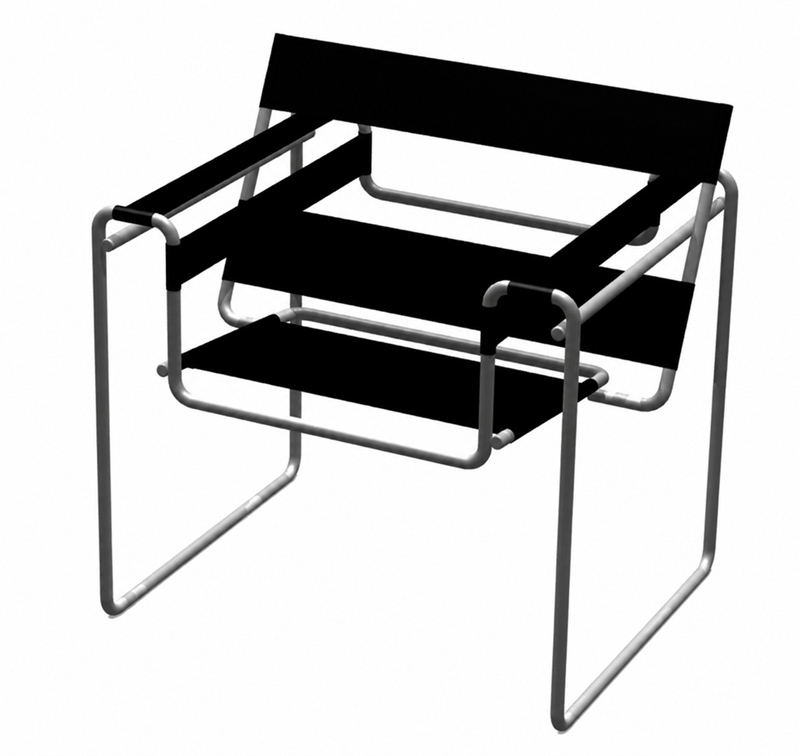
This shift is made tangible in the work of Marcel Breuer. His Wassily Chair, Model B3, of 1925, reduces seating to its essential elements, a tubular steel frame supporting taut planes of canvas or leather. The structure is fully exposed, its method of construction legible at a glance. Nothing is concealed, and nothing is added without purpose. The chair does not attempt to disguise its means. It presents them.
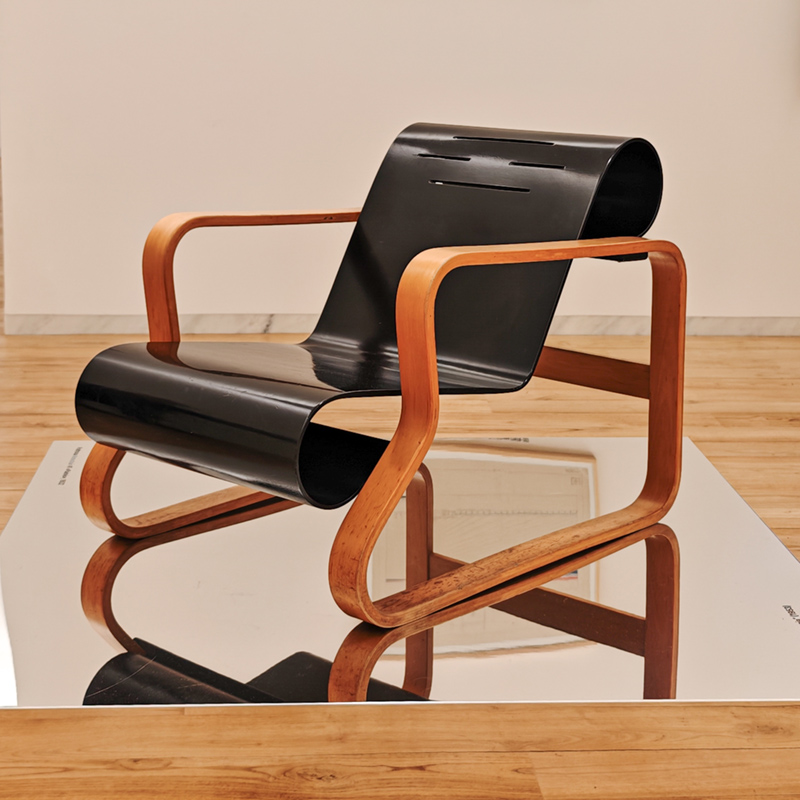
Similarly, Alvar Aalto’s Paimio Chair of 1931 to 1932 approaches the problem from a different material logic. Using bent plywood, Aalto creates a continuous, flowing surface that responds directly to the body. Its angle was calibrated to assist patients with tuberculosis by easing breathing, demonstrating a level of physiological consideration that extends beyond formal innovation. In this moment, modernism aligns technical invention with human need.
With these examples, decoration does not disappear. It changes form. Carving and gilding give way to the grain of wood veneer, the finish of steel, the texture of leather, and the exactness of proportion. These considered decisions shape perception rather than serving as incidental qualities. The chair no longer asserts status through overt display. It communicates it through control, restraint, and material refinement.
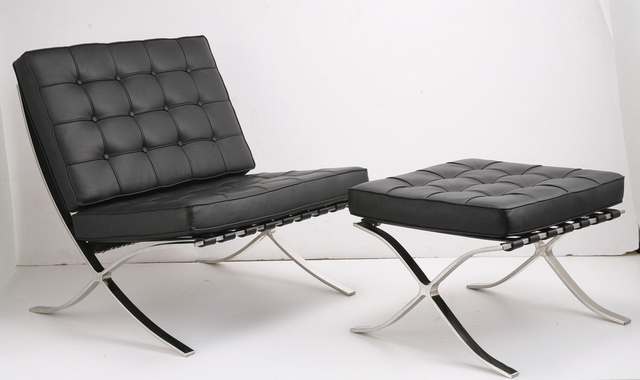
Ludwig Mies van der Rohe’s “Barcelona Chair” (1929), designed for the German Pavilion at the 1929 International Exposition in Barcelona, reintroduces a sense of monumentality. Its metal frame and leather cushions recall ancient ceremonial seating yet are rendered in modern materials. Authority persists; only its language has changed.
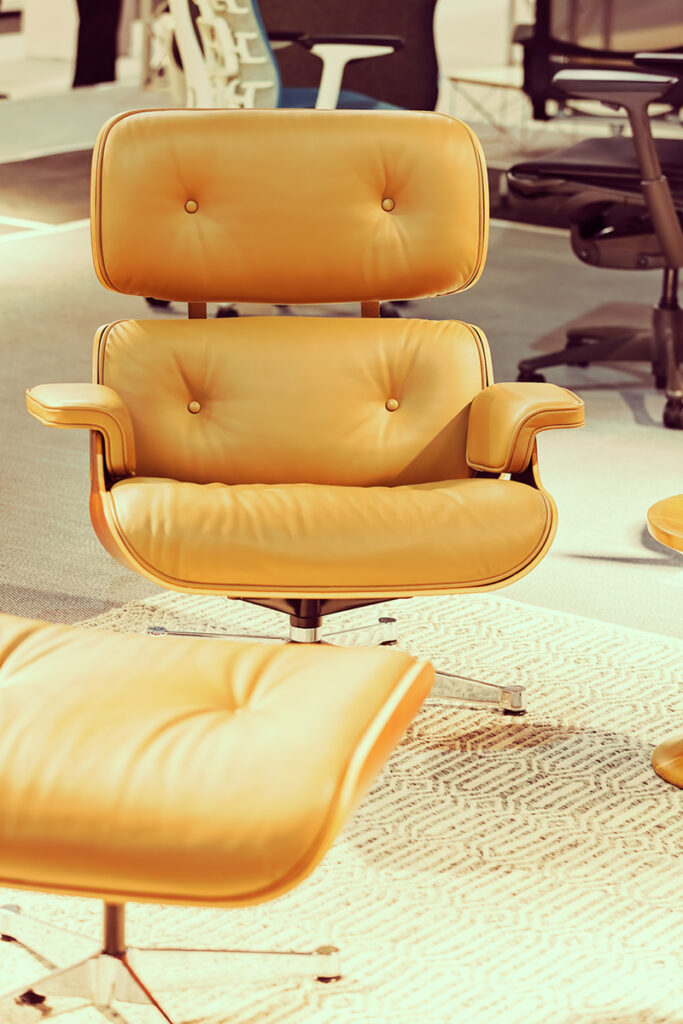
Few objects synthesize these ideas more completely than the “Eames Lounge Chair and Ottoman” (1956). Combining molded plywood shells, leather upholstery, and a separate ottoman, it merges industrial technique with an unmistakable sense of comfort and refinement. It may seem functionally resolved, but it is also deeply aesthetic. Because even here, decoration has not disappeared so much as transformed. The grain of wood veneer, the texture of leather, and the precision of proportion are all aesthetic decisions. Therefore, modernism does not eliminate decoration.
The Chair, Now
Today, the chair exists in all these states at once.
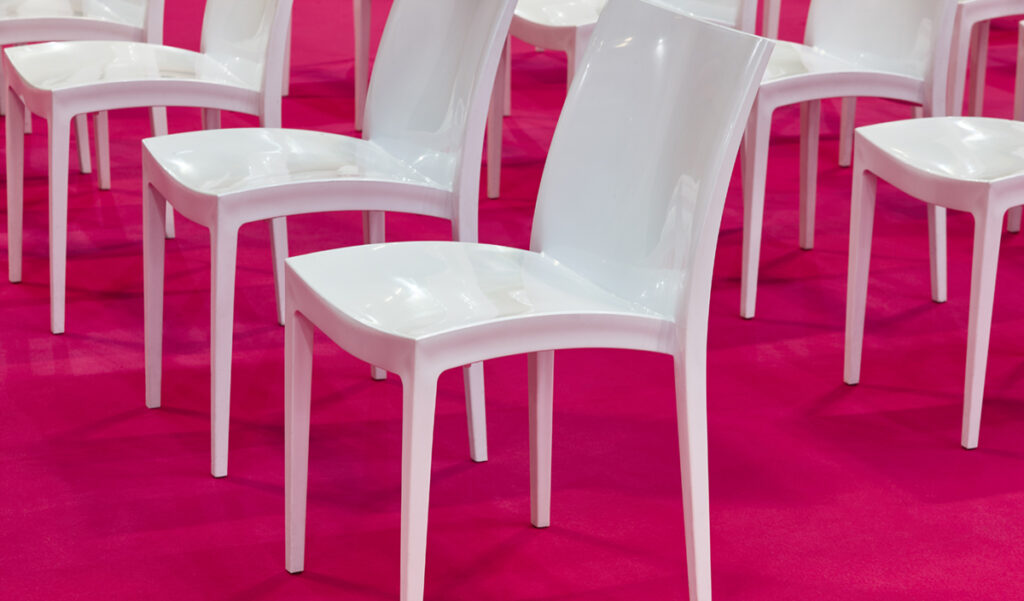
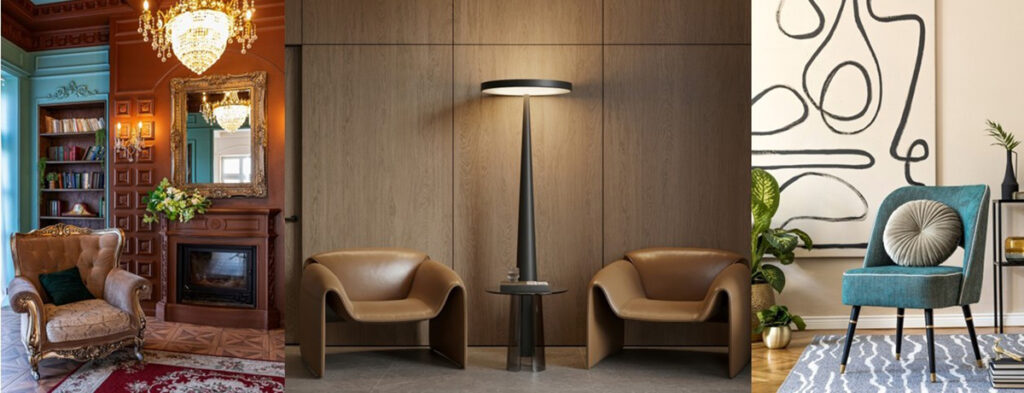
A high-backed executive chair still echoes the authority of a throne. A plush upholstered armchair recalls the sociability of the 18th-century salon. A minimalist molded chair carries forward the logic of modernism.
The chair is an object we use and have inherited through reshaping and reinterpretation, never empty of meaning. The structure has always supported the body, but it is the decoration that tells the story. Because it has always been a record of how we have chosen to live, not merely a place to sit.
Resources:
Giedion, Sigfried. Mechanization Takes Command: A Contribution to Anonymous History. Oxford University Press, 1948.
Forty, Adrian. Objects of Desire: Design and Society since 1750. Thames & Hudson, 1986.
Sparke, Penny. An Introduction to Design and Culture: 1900 to the Present. Routledge, 1986; revised editions later published.
Pile, John F. A History of Interior Design. Wiley, 2000.
Lucie-Smith, Edward. Furniture: A Concise History. Thames & Hudson, 1979.
Wilhide, Elizabeth, ed. Design: The Whole Story. Thames & Hudson, 2016.
Droste, Magdalena. Bauhaus 1919–1933. Taschen, 2002.
Kirkham, Pat. Charles and Ray Eames: Designers of the Twentieth Century. MIT Press, 1995.
Weston, Richard. Alvar Aalto. Phaidon, 1995.
