
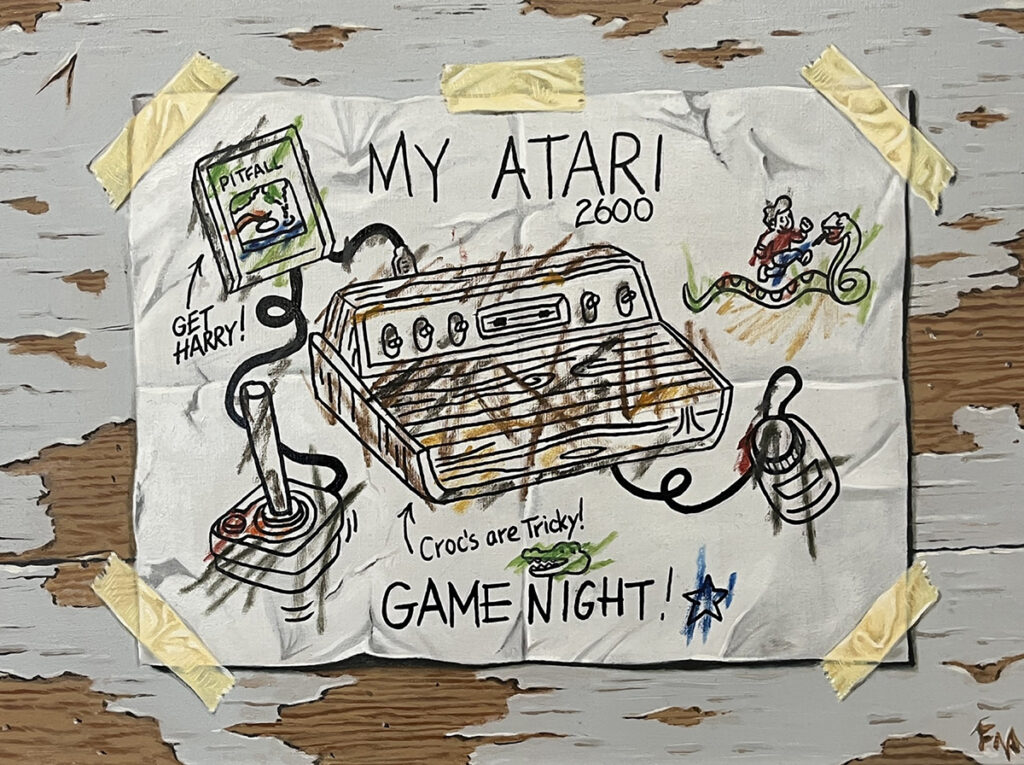

An article by Frank Musto
For generations, artists have blurred the boundary between reality and illusion. In the era of artificial intelligence, that line is becoming almost impossible to see. The question many viewers now ask when standing before a technically masterful painting is no longer “How did you paint that?” but rather, “Is this AI?” Ironically, this uncertainty may place AI in direct conversation with one of art history’s oldest visual tricks: Trompe l’œil.
French for “deceive the eye,” trompe l’œil painting was designed to fool viewers into believing painted objects were real. Artists painstakingly rendered wood grain, folded paper, reflective glass, and architectural depth so convincingly that audiences questioned their own perception. The success of the work depended on illusion. If the viewer were fooled, the artist would have succeeded. Today, AI-generated imagery occupies similar territory. AI can fabricate portraits, environments, and entire visual narratives with astonishing realism. We now find ourselves pausing before images, wondering not whether they are painted, but whether they were made by human hands at all.
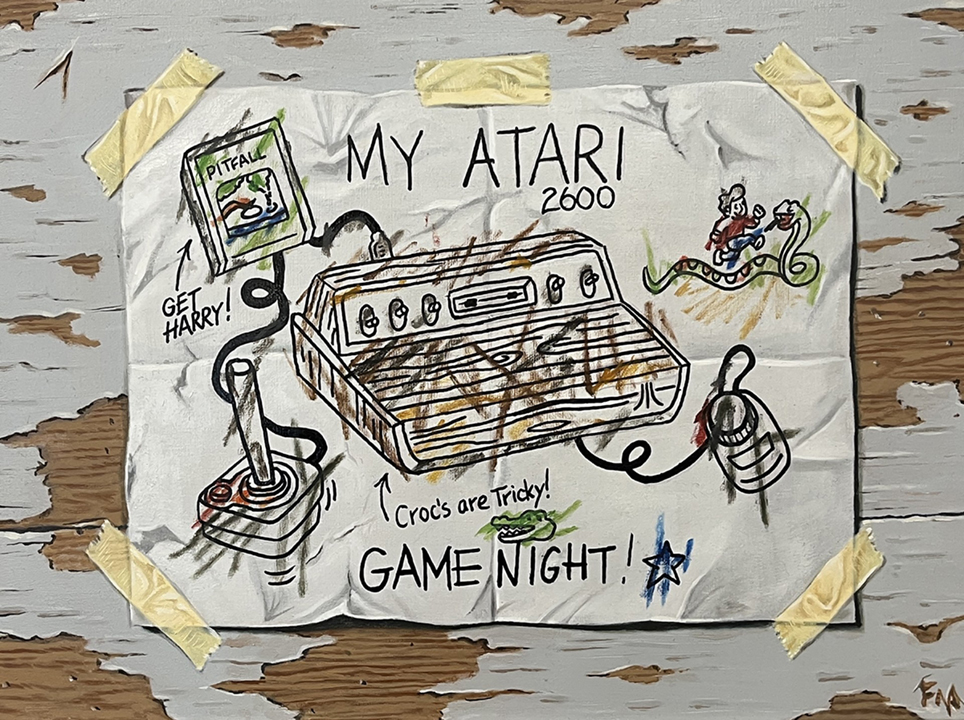
Recently, after completing a painting, I was asked if it was AI-generated. I took it as a compliment. The work had achieved a level of polish and precision that caused viewers to question its origin. Yet the experience also raised a fascinating idea. Has AI become the modern form of trompe l’œil? Both challenge perception. Both force viewers to confront the limits of what they trust visually. But there is an important difference. Traditional trompe l’œil celebrated artistic skill through deception. AI often obscures authorship itself. The illusion is no longer simply “this painted object looks real,” but “did a human even create this?”
This shift may define the next chapter of contemporary art. Artists are no longer only competing with photography or digital media; they are competing with algorithms capable of generating endless visual perfection. In response, some artists lean further into visible brushwork, texture, and imperfection as evidence of the human touch. Others embrace the ambiguity entirely. Perhaps that uncertainty is the point.
Art has always reflected the anxieties and innovations of its time. Trompe l’œil emerged during periods obsessed with realism and technical mastery. AI arrives at an age increasingly concerned with authenticity, originality, and truth itself. In both cases, the viewer becomes part of the artwork, caught in the tension between belief and doubt.
Was this article written by AI? The eye and mind, it seems, still want to be fooled.
